Advancing More Sustainable Packaging
We work hard to use packaging that does more than protect our products and delight our consumers. At Mondelēz International, we strive to continually improve our packaging with the long-term aim of advancing our support for a more circular economy for packaging.
Strategic Approach
We believe that by improving our packaging and measuring our performance, we can make progress toward our long-term aim of advancing our support for a more circular economy for packaging. Our three-part approach includes:
Reducing Packaging by aiming to utilize packaging that is lightweight, safe and, where appropriate can be reused or recycled.
Evolving Packaging involves aiming to design our packaging to be recyclable, removing problematic materials, and including recycled plastic, where appropriate, to help reduce packaging waste.
Improving Systems means supporting the development of infrastructure and capabilities with the aim of being able to collect the packaging we place on the market. We support the implementation of effective policy including Extended Producer Responsibility (EPR), that helps enable the development of collection systems for all types of packaging. We are collaborating with other companies, policymakers, investors and other key actors to help advance this work.
While we continue to progress in implementing our strategy, constrained supply of food contact recycled plastic, restrictions on the use of recycled plastic for food contact packaging in some markets, the high cost of new materials, the complexity of implementing novel packaging solutions across a complex global network, and the slower than anticipated scaling of circular systems remain challenges that need to be overcome in collaboration with peers, governments and other key actors as we continue to work toward achieving our long-term aim of advancing our support for a more circular economy for packaging.
Learn more about each of these three parts below.
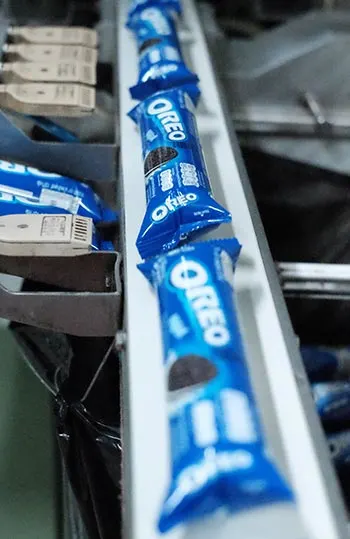
Reducing Packaging
We aim to utilize packaging that is lightweight, safe and, where appropriate can be reused or recycled.
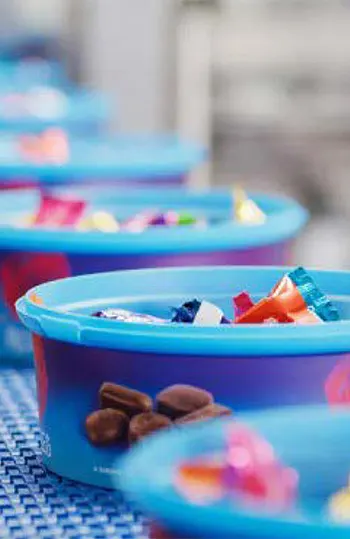
Evolving Packaging
We aim to design our packaging to be recyclable, removing certain chemicals and materials, and including recycled plastic, where appropriate, to help reduce packaging waste. Our goal is to use packaging that is designed to be recyclable and continue to increase our use of recycled content.
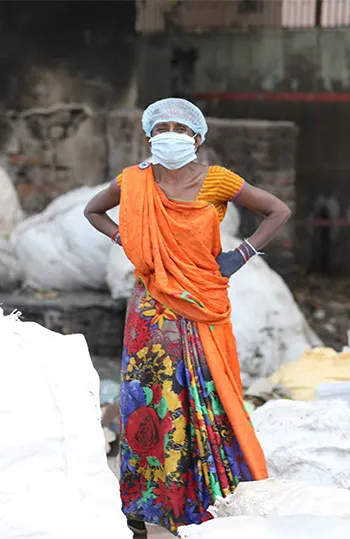
Improving Systems
We support the development of infrastructure and capabilities. Our aim is to help enable the development of collection and recycling systems that cover all types of plastic packaging. We are partnering with key actors along the value chain to help develop enhanced policies and scale waste management infrastructure.
Our Progress
OUR AIM* | 2025 PERFORMANCE |
|---|---|
Approximately 98% or more of our packaging designed to be recyclable by 2030 | 96% |
5% reduction in overall virgin plastic by 2025 (vs. 2020) | 11.5% |
25% reduction in rigid virgin plastic by 2030 (vs. 2020) | 8.4% |
5% recycled plastic content by 2030 | 3.7% |
*We aim to regularly and transparently report our progress. You can find additional details on our goals within the About This Report section of our 2025 Snacking Made Right Report.
Working Together
Working to help advance a more circular economy demands infrastructure development, investment, an enabling policy and regulatory environment, and cooperation between multiple stakeholders. There are many challenges that may impede the advancement of a circular economy for packaging, including a landscape of disconnected national and sub-national policies, the need to transform complex global supply chains, and the sourcing of high cost and limited availability materials.
Collaboration is key to overcoming challenges and achieving progress. We collaborate with many companies and other stakeholders on topics ranging from innovation of more sustainable alternative materials to helping develop optimal policies. Examples include: